Chief Roman Jackson was officially sworn in as the University of West Florida Police Department chief on Jan. 16, 2026. Jackson comes to UWF with 20 years of experience, including work with the U.S. Marshals Service and the FBI National Academy. He is also a Purple Heart recipient.
The accolades Jackson received from peers and community leaders along the Gulf Coast during his swearing-in ceremony indicate the deep respect many have for the new chief.
Sitting with Jackson during his first 100 days in office was inspiring and motivating. As I entered his office, he commented on my purple notebook and pen.
“Speaking of purple,” I responded, “could you please tell me about your Purple Heart and how you received it?”

Jackson recounted being shot in the line of duty on May 14, 2004. What began as a routine burglary report ended with him being shot three times. As he spoke, he was candid and authentic about the incident, his recovery, and coping with the after-effects of trauma.
He explained how that defining moment fueled his studies in critical incident management and officer mental health. Listening to him, I felt pieces of my own heart heal from personal traumas. His story is a testament to resilience and faith.
After reflecting on the gravity of his journey, I shifted the conversation toward his vision for the future of the department and his transition to campus life.
Q&A with the Chief
What was the first thing on your “to-do” list on Day 1?
Jackson: Adapt, look for what there is to accomplish, create a culture, identify things to fix immediately, and make a plan.
Why did you want to be UWFPD chief?
Jackson: For the challenge, to leave a mark on a place, and for the opportunity to connect with the community.
You transitioned from a municipal role at the Santa Rosa County Sheriff’s Office. What has been the biggest surprise about university policing?
Jackson: How inclusive the campus is. It has its own community feel. Also, having a president as a boss instead of an elected official, and seeing how everyone on campus truly loves their jobs.
You are an instructor in officer mental health. How are you implementing those principles here?
Jackson: By being available and encouraging positive engagement. We don’t want students to only call us when things are bad; we want them to know we are around for the good, too. Above all, we want them safe.
How do you envision the department’s role in supporting students during a mental health crisis?
Jackson: It’s about influence, not just handcuffs. We maintain an office at the Commons staffed with an officer to be available. We want to empower students to succeed.
What is one thing you wish every student knew about the department?
Jackson: All our officers and staff truly love their jobs. It shows in our high retention rate.
Florida Senate Bill 176 (effective July 1, 2026) brings new requirements for campus safety. How is UWF preparing?
Jackson: We will be supportive of the president’s vision. It’s a discussion we are continuing to have to stay ahead of the curve.
Are there any new safety technologies coming to campus next year?
Jackson: We are integrating License Plate Readers (LPR). It’s a vital investigative tool. The Escambia County Sheriff’s Office is donating the equipment.
You believe in high professional standards. What does that look like in practice?
Jackson: Customer service, transparency, empathy. It means officers treating those we serve as if they were family members and asking, “What is your impact?”
How are you approaching this role differently than your predecessor?
Jackson: By furthering achievements and doing new things. I want to make decisions today that leave an impact tomorrow.
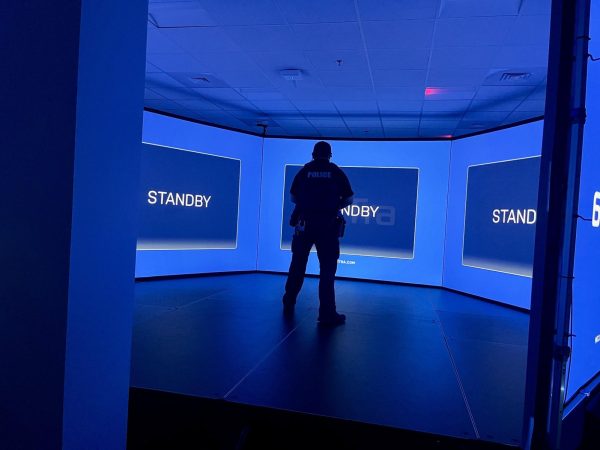
Can you tell me about the VirTra 300 LE simulator and the coordinated response with ECSO?
Jackson: We send officers in for 10-minute intervals weekly so they are comfortable. The more you train, the more prepared you are. Practice doesn’t make perfect; perfect practice makes perfect. With the ECSO, we are working to merge communication channels, reviewing policies, and coordinating together for joint training.
How did the FBI National Academy shape you?
Jackson: It was the most rewarding experience of my career. Only 3% of law enforcement officers complete it. I learned a lot about teamwork and being accepting of others.
The badge Chief Jackson wears is backed by more than just twenty years of law enforcement experience; it is backed by a profound understanding of human vulnerability. By turning a life-altering tragedy into a career-long mission for mental health advocacy and community connection, Jackson is shifting the culture of campus policing. As he navigates his first year at Building 94, his focus remains clear: it isn’t just about the rank or the titles—it’s about the lasting impact of a leader who knows exactly what it means to persevere.