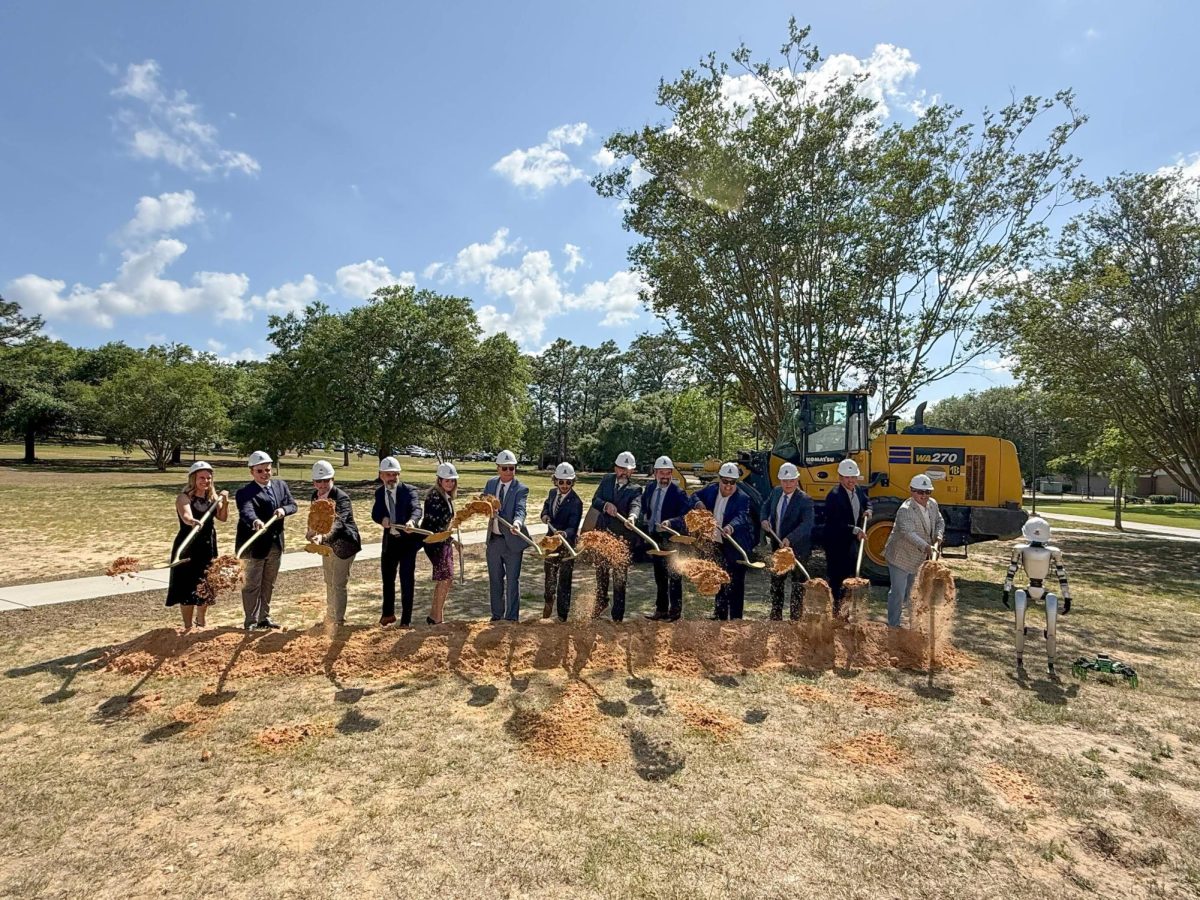
The UWF Archeology Institute has discovered artifacts, believed to be hundreds of years old, on the University of West Florida campus.
The site was discovered during an archeological evaluation of one of the future construction sites of the Darrell Gooden Football stadium.
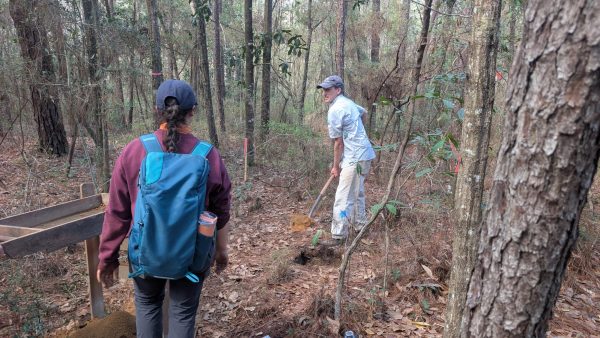
According to Jennifer Melcher, a faculty research associate at the UWF Archeology Institute, Florida law requires that excavations be completed before any construction occurs on State owned property if it is likely that the site contains anything with archeological value.
“Doctor Bense led an initial survey out here in the 1980s, around 1989,” said Melcher. “So we knew there was a site out there and so we came out to try and find that site…”
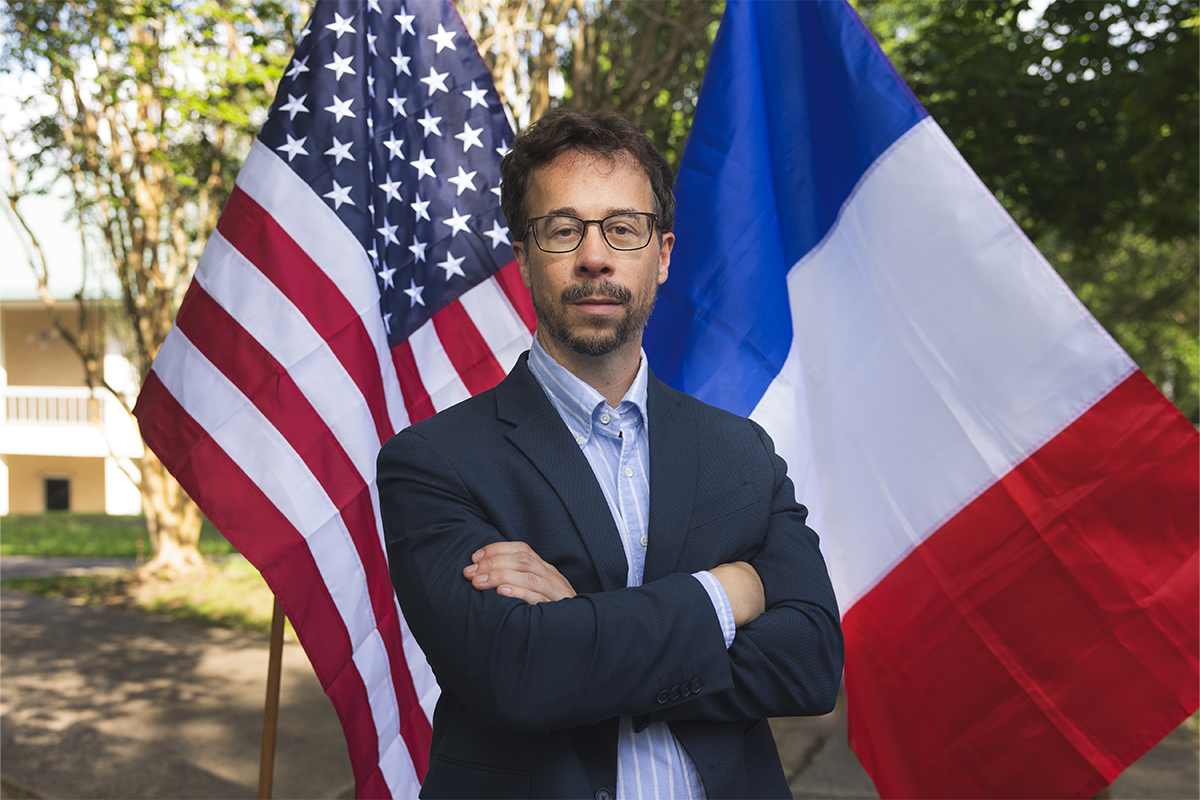
Dr. Gougeon, Director of the UWF Archeology Institute, noted that he and his volunteer team have likely uncovered artifacts from two distinct societies.
“We have recovered distinctly decorated ceramics from two different precolumbian Native American cultures,” said Dr. Gougeon. “The oldest is referred to as the Weeden Island culture of the Woodland period and dates to probably the early end of the 600-900 AD range. The most recent evidence dates to the middle to late Mississippian period, approximately 1250-1600 AD.”
Ceramics and other wares of the Mississippian period and the Weeden Island Culture have been discovered throughout Florida. Individuals of the former and the latter were prominently located in the Southeastern United States.
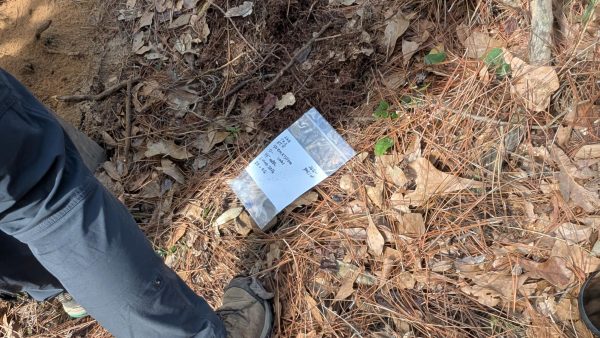
These discoveries could yield extensive insight into these long-gone civilizations according to Dr. Gougeon. The professor noted that there is potential to learn about “everything from foodways to regional social, political, and economic dynamics.”
The Archeology Institute will continue to excavate the site, a task that will take “a few more days” according to Melcher. Once finished, the team will write a report and submit it to the State who will then provide “guidance on what the next steps will be.”
The construction of the stadium on that location affects the next steps of the excavation process, according to Dr. Gougeon.
“UWF Facilities is under a tight deadline to complete their project,” said Gougeon. “They may want to shift the location of this particular part of their infrastructure project or plan to have us completely excavate the site.”
But Dr. Gougeon seemed optimistic about the collaboration.
“UWF Facilities has been a great partner in this work over the years and we look forward to continuing to help UWF grow while also taking care of our community’s past.” said the professor
As the discovery was made fairly recently, the effects that the project will have on the stadium construction timeline remain to be seen.
Dr. Gougeon and Melcher are aided by a volunteer team of archeology students who have been working alongside them since the site was discovered.
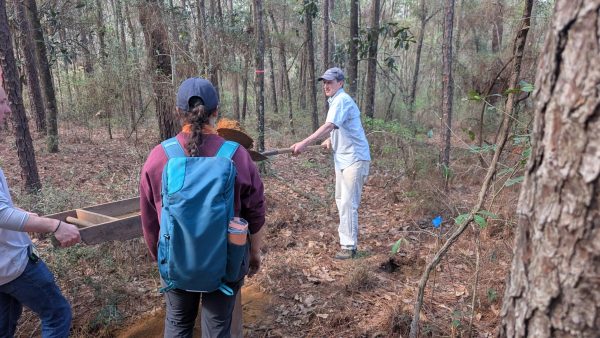
“…our students get to have that laboratory experience and that experiential learning right here on campus,” said Melcher. “They don’t have to go to, you know, a lot of archeology programs, they have to go, you know, miles away and stay off site. Everybody out here gets to go home and sleep in their own bed. So it’s a great way for students to gain this learning and experiential skill set.”
Dr. David Earle, UWF Dean of the College of Arts, Social Sciences, and Humanities, seconded Melcher’s enthusiasm about this learning opportunity for UWF archeology students and expressed excitement about working alongside the UWF facilities department.
“This find illustrates just how widespread this cultural heritage is in our area,” said Dean Earle. “Furthermore, it’s a great example and opportunity for our students since such finds and the handling of them are exactly the type of real-world work experiences that our students will see and need to know how to handle on the job. We’re just glad that CASSH can help Facilities in the construction of the new stadium and the development of the stadium.”
This is not the first excavation to occur on UWF campus as Dr. Gougeon noted that there have been many going back almost fifty years.
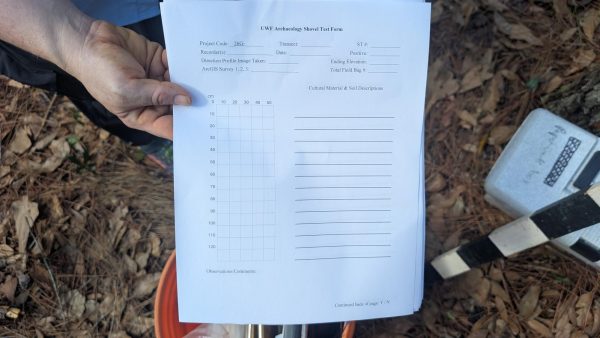
“UWF’s Archaeology Institute and Department of Anthropology have been discovering and excavating archaeological sites on campus since at least the late 1980s.” said Gougeon. “We have found sites dating back thousands of years ago through the historic fish camps that dotted campus when it was first created over 50 years ago.”
Specific details about the time and location of the discovery have been left out of the article at the request of the UWF Archeology department who ask that no one visits or disrupts the site.